
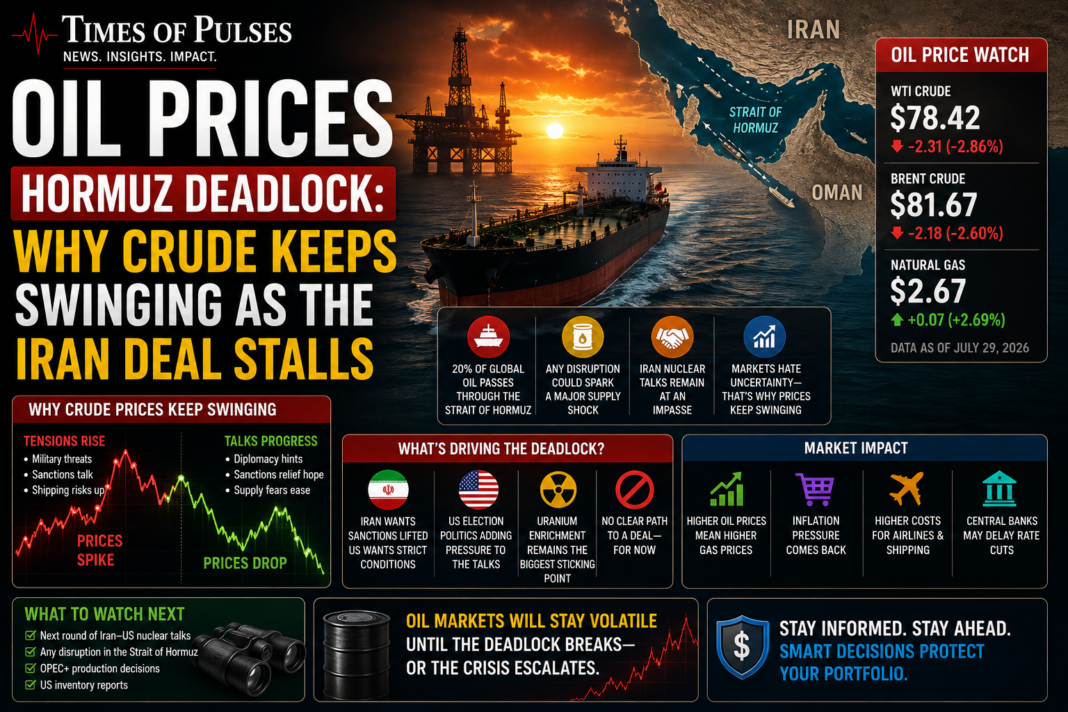
Oil Prices Hormuz Deadlock: Why Crude Keeps Swinging as the Iran Deal Stalls
If you feel like oil prices have been doing the opposite of whatever you expected all week, you’re reading the situation correctly. The oil prices Hormuz deadlock story has become one of the more genuinely confusing energy narratives of 2026 — a rapid plunge on deal hopes, followed just days later by a climb back as prospects for an imminent deal fade rather than firm up. This isn’t ordinary market noise. It’s a real-time diplomatic standoff playing out in barrel prices, and it’s worth understanding before you fill up your tank again.
How We Got Here: A Genuine Rollercoaster Week
Just under a week ago, oil prices Hormuz deadlock headlines were actually optimistic. A senior Trump administration official said a deal to reopen the Strait of Hormuz could be reached “today or tomorrow,” and Treasury Secretary Scott Bessent told CNBC there was a real chance of an agreement within hours. Markets reacted immediately: Brent crude tumbled more than 6% to below $79 a barrel on the rekindled hope alone. Qatar, acting as mediator between Washington and Tehran, confirmed talks were ongoing even as Iran publicly denied direct negotiations with the US.
That optimism didn’t last. Iran has since laid out its own conditions for reopening the waterway, insisting it won’t restore normal shipping without major concessions from the United States. Brent crude has climbed back more than 1% as those demands cloud the outlook, and as of this week, prospects for an imminent deal are fading rather than firming up.
Why the Oil Prices Hormuz Deadlock Situation Matters More Than a Typical Price Swing
The Strait of Hormuz carries roughly a fifth of the world’s oil supply, so any real uncertainty about its status tends to move markets more than most single geopolitical headlines. What makes this particular stretch of the oil prices Hormuz deadlock story unusual is the speed of the reversal — a 6% one-day plunge on hope, followed by a steady climb back as that same hope faded, all within about a week.
One commodities economist put it plainly: market moves won’t stay this “benign” if the deadlock drags into next week. That’s a meaningful warning, because a few other pressures are quietly building in the background that could make the next move sharper than the last one:
- China’s crude imports are rising, adding demand pressure at exactly the wrong moment for a market already nervous about supply
- Houthi attacks on Saudi infrastructure remain an active risk that could disrupt output independent of anything happening in the strait itself
- Residual risk of reversal. Even analysts who expect a diplomatic breakthrough eventually note that any deal could just as easily unravel again, which limits how far prices are likely to fall even on genuinely good news
What This Means for Your Gas Budget
If this is starting to sound familiar, it’s because it echoes a pattern we’ve covered before with gas prices reacting to the broader Iran conflict earlier this year — prices spike fast on bad news and come down much more slowly, even when the underlying tension eases. The current back-and-forth makes budgeting around gas prices unusually difficult right now, because a single diplomatic phone call can move prices several percentage points in either direction within a day.
Practical takeaway: don’t assume this week’s price is a reliable baseline for next month. With talks this fluid, building a small buffer into your fuel budget is more useful right now than trying to time a “good week” to fill up — the same emergency fund logic that helps with any unpredictable expense applies just as well here.
What This Means for Your Portfolio
- Energy stocks are likely to stay volatile alongside the headlines — don’t read any single day’s move as a lasting trend until the deadlock actually resolves one way or the other.
- Watch for the deal breaking through vs. the deadlock extending past this week — both economists quoted in current coverage flag next week as a meaningful threshold for whether this stays “benign” or turns into a sharper move.
- If you hold broad index funds, this is a story to watch rather than react to. Energy sector weighting in most diversified funds is modest enough that a single geopolitical story rarely justifies a portfolio change on its own.
Bottom Line
The oil prices Hormuz deadlock saga is a genuine reminder of how fast sentiment-driven markets can swing when a deal feels close one day and stalled the next. Prices plunged on hope, climbed back on disappointment, and now sit in a genuinely uncertain spot with real pressures (China’s demand, Houthi risk) building underneath the headlines. If you’re budgeting for gas or watching energy stocks, the smartest move is the same one that’s worked through every other stretch of this conflict: avoid reacting to any single day’s headline, build in a buffer, and wait for the deadlock to actually break — in either direction — before assuming you know where prices go next.
This article is for informational and educational purposes only and does not constitute financial or investment advice. Geopolitical events and energy markets are unpredictable and can change rapidly; consult a licensed financial advisor before making investment decisions.