
CPI Report July 2026: Inflation Just Posted Its Biggest Drop Since 2020 — Here’s What Changed
After weeks of unsettling headlines about oil prices, Fed uncertainty, and market volatility, the CPI report July 2026 finally brought some genuinely good news. U.S. consumer inflation posted its biggest one-month decrease since April 2020, stocks rallied, and President Trump scrapped his controversial Hormuz shipping toll plan. Here’s what the CPI report July 2026 actually showed, and what it means for your mortgage, savings, and everyday budget.
What the CPI Report July 2026 Actually Showed
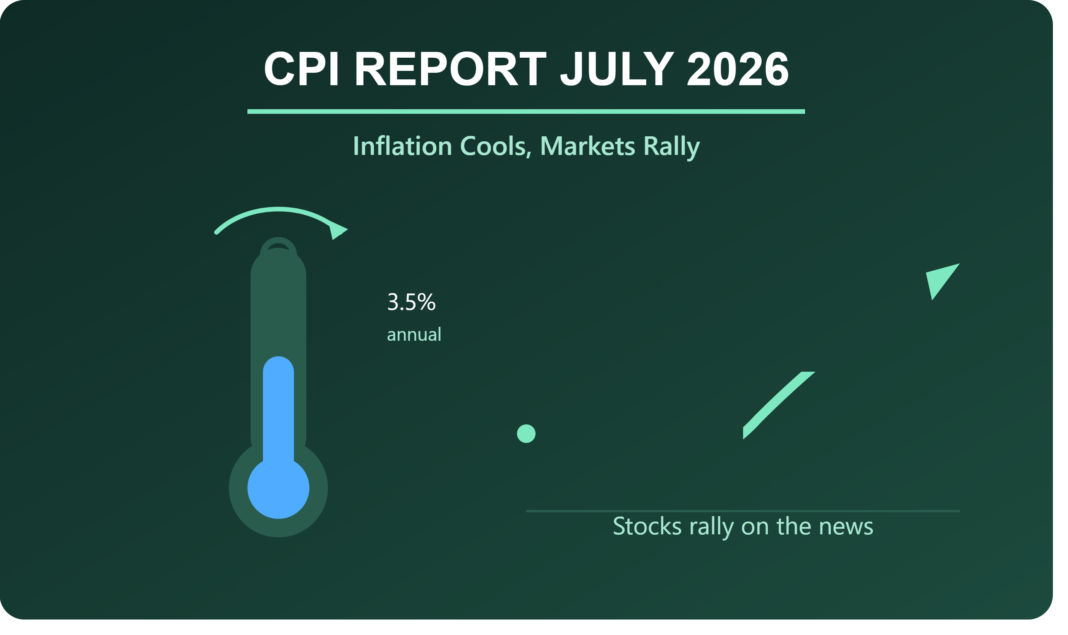
Prices fell 0.4% month-over-month in June, while the annual inflation rate came in at 3.5% — a smaller increase than economists had been bracing for after weeks of oil-driven inflation fears. Core CPI, which strips out volatile food and energy costs, held flat at 0.0% for the month and rose 2.6% year-over-year.
This matters enormously given the context: just days earlier, escalating U.S.-Iran tensions had pushed oil prices sharply higher, and many analysts worried that energy costs would show up as a fresh inflation spike in the CPI report July 2026. Instead, the data came in cooler than feared, which markets read as a genuine relief signal.
Why Markets Reacted So Strongly to the CPI Report July 2026
U.S. stocks ended higher the day this data came out, as investors weighed the cooling inflation numbers alongside Federal Reserve Chair Kevin Warsh’s first congressional testimony and a batch of major bank earnings. Warsh reiterated his commitment to price stability and specifically cited the benefits of the ongoing AI investment boom as a factor that could keep inflation in check going forward.
Adding to the positive momentum, President Trump scrapped his previously announced Hormuz shipping toll plan the same day, which had been rattling the global shipping industry and adding to inflation concerns tied to energy and trade costs. Removing that uncertainty, on top of the cooler CPI report July 2026, gave markets a clearer path forward after weeks of conflicting signals.
What This Means for the Fed’s Next Move
If you’ve been following the Fed’s internal disagreements over the past few weeks, this CPI report July 2026 data is a significant piece of the puzzle. Recall that Fed officials were genuinely split: some wanted to cut rates due to a weakening jobs market, while others worried that oil-driven inflation would force the Fed to hold steady or even consider tightening.
A cooler-than-expected CPI report July 2026 tips the scales meaningfully toward the “room to cut” camp. If energy prices aren’t translating into broader inflation the way some feared, the Fed has more flexibility to respond to labor market weakness without worrying as much about reigniting inflation.
What This Means for Your Mortgage
Cooling inflation data generally supports lower long-term interest rate expectations, since it reduces the pressure on the Fed to keep rates elevated. If this trend holds over the next few CPI reports, mortgage rates could see more sustained downward movement than the mixed signals of recent weeks suggested.
Practical takeaway: if you’ve been waiting for clearer signs before locking in a mortgage rate or refinancing, this CPI report July 2026 is one of the more encouraging data points in recent weeks — though a single month’s data still isn’t a guarantee of a trend.
What This Means for Your Savings and Credit Cards
If inflation genuinely continues cooling, expect the conversation around Fed rate cuts to gain momentum again, which would eventually bring down both high-yield savings rates and credit card APRs. For now, savings rates remain attractive, so there’s no urgency to make dramatic changes, but this is a good moment to:
- Lock in a CD if you have money you won’t need for a while, since today’s rates may not last if cuts accelerate
- Prioritize paying down high-interest credit card debt now, since a future rate cut helps but won’t erase existing balances
Why the Hormuz Toll Reversal Matters Too
Beyond the CPI report July 2026 itself, scrapping the Hormuz shipping toll removes a real source of uncertainty for global trade and energy costs. The toll plan had triggered alarm across the global shipping industry, since a fifth of the world’s oil supply passes through that corridor. Removing it reduces one of the clearer paths through which Middle East tensions could have kept pushing inflation higher in future reports.
What You Should Actually Do This Week
- Don’t overreact to one month of good data, but do note that this CPI report July 2026 meaningfully changes the inflation narrative compared to a few weeks ago
- If you’re mortgage shopping, keep watching for a pattern across the next couple of CPI reports before assuming rates will keep falling
- Take advantage of today’s still-attractive savings and CD rates while they remain elevated, since sustained cooling inflation could eventually bring them down
- Keep tackling high-interest debt regardless of what the Fed eventually does — that’s a good move in any rate environment
Bottom Line
The CPI report July 2026 delivered a genuinely encouraging surprise after weeks of oil-driven inflation fears: prices cooled more than expected, markets rallied, and a source of geopolitical economic uncertainty got resolved on the same day. It doesn’t erase the mixed signals the economy has been sending all year, but it does meaningfully shift the odds toward the Fed having more room to maneuver in the months ahead. As always, one month of data is a data point, not a guarantee — but for once, it’s a data point worth feeling good about.
This article is for informational purposes only and does not constitute financial advice. Economic data and Fed policy decisions are inherently uncertain; consult a licensed financial advisor before making borrowing or investment decisions.