
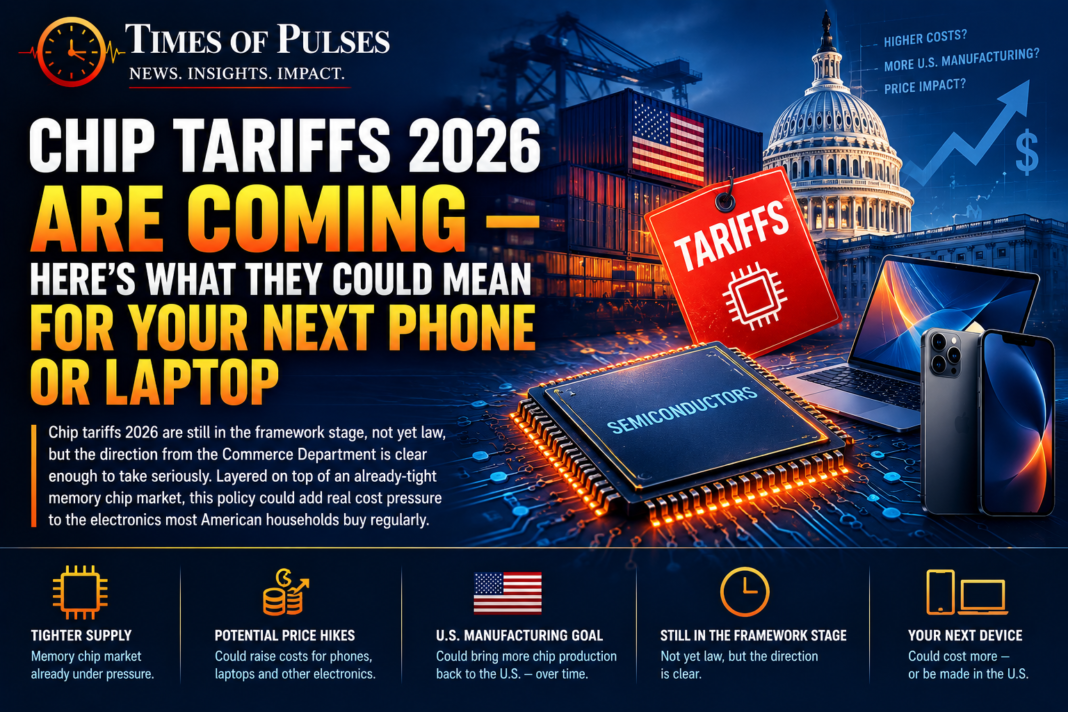
Chip Tariffs 2026 Are Coming — Here’s What They Could Mean for Your Next Phone or Laptop
The Trump administration just confirmed something tech buyers should be paying attention to. On September 2, Commerce Secretary Howard Lutnick told CNBC that the White House is actively developing a tariff framework specifically targeting semiconductors, and that chipmakers already know it’s coming. These chip tariffs 2026 plans arrive at the worst possible moment for consumers, right as memory chip shortages are already pushing device prices higher on their own.
What Lutnick Actually Said About Chip Tariffs 2026
Lutnick confirmed a Politico report from the previous week that the administration had been quietly considering the move. Speaking on CNBC, he described the coming approach as targeted rather than blanket, saying the goal is to reward domestic manufacturing: “if you build here, you don’t pay, but if you don’t build here, expect to pay to enter the greatest market in the world.” He added that the administration expects semiconductor production to shift back to the United States as a result.
The exact rate, timeline, and scope of these chip tariffs 2026 haven’t been made public yet. But the direction is now unmistakable: companies that manufacture chips overseas and sell into the U.S. market should expect to pay more to do so, and some of that cost is likely to land on the products you buy.
Why This Is Landing at a Bad Time
If this news feels familiar, it should. We’ve been covering a related story for weeks: a global memory chip shortage that’s already driving up the cost of components inside nearly every phone, laptop, and PC on the market. J.P. Morgan has estimated DRAM prices could climb more than 400% between 2024 and the end of 2026, a trend nicknamed “chipflation.” Chip tariffs 2026, layered on top of a shortage that’s already tightening supply, could compound the pressure on consumer electronics prices rather than offset it.
This isn’t the first time chip-related news has rattled markets this year either. Back in the spring, we covered how a single Chinese chip breakthrough report was enough to trigger a global market selloff, a reminder of just how sensitive the entire tech sector has become to anything touching semiconductor supply chains. Chip tariffs 2026 are a policy-driven version of that same sensitivity: a single Commerce Department announcement can move chipmaker stocks and consumer prices in the same news cycle.
The Winners and Losers of Chip Tariffs 2026
Companies that already manufacture chips domestically stand to benefit the most from this policy shift, since Lutnick’s framework explicitly exempts companies that “build here.” That’s part of why some memory chip makers have had such a strong run this year. We wrote about how one overlooked chipmaker’s stock rallied more than 700% as memory demand surged, and a domestic-manufacturing carve-out in chip tariffs 2026 could add another tailwind for U.S.-based producers specifically.
On the other side, companies that rely heavily on overseas chip fabrication, and by extension, the consumers who buy their finished products, are the ones more likely to feel the cost of these tariffs. Semiconductors sit inside far more than just computers and phones, they’re in cars, appliances, and virtually every piece of modern consumer electronics, which means the reach of chip tariffs 2026 could extend well beyond the tech aisle.
The Bigger Market Backdrop
Chip tariffs 2026 aren’t happening in isolation. They’re landing during a week when the benchmark 10-year Treasury yield hit 4.814%, its highest level since November 2023, and private payrolls grew by just 38,000 jobs in August, the slowest pace since January and below economist expectations. Renewed U.S.-Iran hostilities have also pushed oil prices higher and added another layer of uncertainty to markets already digesting rising yields and a cooling labor market.
None of that changes the tariff story directly, but it does mean chip tariffs 2026 are arriving while consumers are already dealing with a mix of higher borrowing costs, a softening job market, and elevated energy prices. Extra cost pressure on electronics is not landing on especially strong footing for household budgets right now.
What This Means for Your Own Money
- If you’re planning a major electronics purchase, timing may matter more this year. Between chipflation and the possibility of new tariffs, prices on phones, laptops, and other chip-heavy devices are more likely to drift higher than lower over the coming months.
- Watch how this interacts with existing consumer costs. We’ve previously covered how tariff revenue has tended to flow to large companies rather than back to consumers, so don’t assume a “build here” exemption automatically translates into savings at checkout.
- This is a sector-specific risk, not a reason to panic-sell broad holdings. If you hold index funds or tech ETFs, you already have some exposure to how chip tariffs 2026 play out, but that’s different from needing to make a dramatic portfolio change today.
- No official rate or start date exists yet. Treat “chip tariffs 2026” as a developing policy story for now, worth watching closely, but not yet a finalized cost you can budget around precisely.
Bottom Line
Chip tariffs 2026 are still in the framework stage, not yet law, but the direction from the Commerce Department is clear enough to take seriously. Layered on top of an already-tight memory chip market, this policy could add real cost pressure to the electronics most American households buy regularly. Whether it ultimately pushes more chip manufacturing back to the U.S., as the administration hopes, or simply raises prices in the meantime, is the question worth watching over the next few months.
This article is for informational purposes only and does not constitute financial advice. Consult a licensed financial advisor before making changes to your investment portfolio.