
Weak June Jobs Report: What It Really Means for Your Mortgage, Savings, and Wallet
If you’ve seen finance headlines this week and felt a little confused, you’re not alone. The June jobs report came in far weaker than expected, and it’s already shaking up expectations for what the Federal Reserve does next. Here’s what actually happened, and more importantly, what it means for your money.
What Happened, in Plain English
The Department of Labor reported that the U.S. economy added only 57,000 jobs in June — well short of what economists were expecting. On top of that, hiring numbers for both April and May were revised down, meaning the job market has actually been cooling faster than anyone realized.
Meanwhile, private payroll data from earlier in the week told a similar story: hiring by private employers slowed noticeably compared to the previous month.
Despite this, stocks didn’t panic. In fact, the Dow Jones Industrial Average climbed to a fresh record high the same day the jobs data came out. Why? Because a weak jobs report is exactly the kind of thing that makes it more likely the Federal Reserve will cut interest rates soon — and lower rates tend to be good news for stock prices.
Why a “Bad” Jobs Report Can Be “Good” News for Rates
This might feel backwards, so here’s the logic:
- The Fed has two main jobs: keep inflation under control, and keep unemployment low
- When the job market is running hot, the Fed tends to keep interest rates higher to avoid overheating the economy
- When hiring slows down like it just did, the Fed has more room to lower interest rates without worrying as much about inflation
The new Fed Chairman has also been signaling that the central bank wants to lean more heavily on actual economic data — like this jobs report — rather than just giving vague guidance about future plans. That makes reports like this one even more important to watch.
What This Could Mean for Mortgage Rates

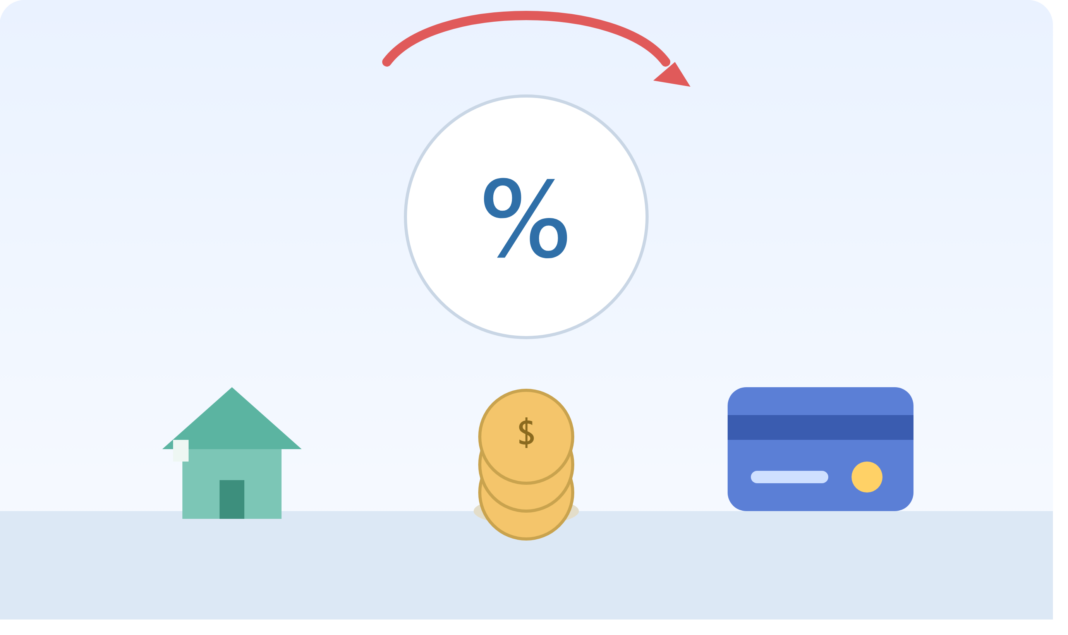
how jobs report affects mortgage rates
Mortgage rates don’t move in lockstep with the Fed’s benchmark rate, but they are heavily influenced by expectations of where rates are headed. A weaker jobs market generally pushes mortgage rates down over time, because:
- Investors expect the Fed to cut rates, which lowers yields on bonds
- Mortgage rates tend to track the 10-year Treasury yield fairly closely
If you’ve been waiting to buy a home or refinance: this is a trend worth watching closely over the coming weeks. Rates don’t drop overnight, but a softening job market is one of the strongest signals that borrowing could get a little cheaper later this year.
What This Means for Your Savings Account
Here’s the flip side. If the Fed does cut rates later this year, the high-yield savings accounts and CDs that have been paying attractive interest lately will likely see their rates drop too.
If you’ve been sitting on cash in a high-yield savings account:
- Consider locking in a CD now if you won’t need the cash for a while — CD rates are typically fixed for the term, so you can lock in today’s higher rate before cuts happen
- Don’t panic and move everything — savings account rates change gradually, not overnight
- Keep your emergency fund liquid regardless of where rates go; access to cash matters more than an extra fraction of a percent
What This Means for Credit Card Debt
If you’re carrying credit card debt, this is genuinely good news, even if it takes a while to show up. Credit card interest rates are closely tied to the Fed’s benchmark rate. When the Fed cuts, variable-rate credit card APRs typically follow within a billing cycle or two.
That said, don’t wait around for rate cuts to deal with high-interest debt. A few things worth doing right now regardless of what the Fed does:
- Look into a balance transfer card with a 0% introductory period if your credit is solid
- Prioritize paying off the card with the highest interest rate first
- Call your card issuer and simply ask for a lower rate — it works more often than people expect
The Bigger Picture: Should You Be Worried?
A weaker jobs report naturally raises the question of whether a recession is coming. It’s worth keeping some perspective here:
- The stock market’s reaction (hitting record highs, not selling off) suggests investors aren’t panicking about a broader slowdown
- Corporate earnings have remained strong, with S&P 500 companies tracking toward another quarter of double-digit profit growth
- One month of soft hiring data doesn’t confirm a trend — economists will be watching July and August numbers closely before drawing bigger conclusions
What You Should Actually Do This Week
- If you’re house hunting: keep an eye on mortgage rate trends over the next month rather than rushing a decision today
- If you have savings sitting in cash: compare your bank’s current rate against a CD if you have money you won’t need soon
- If you’re carrying credit card debt: don’t wait on the Fed — start tackling the highest-rate balance now
- If you’re investing long-term: resist the urge to make big moves based on a single monthly report; one data point rarely changes a solid long-term plan
Bottom Line
A weaker-than-expected jobs report isn’t a crisis, but it is a signal worth paying attention to. It nudges the odds toward lower interest rates in the months ahead, which has real implications for anyone with a mortgage, a savings account, or credit card debt. The smart move isn’t to panic or overreact — it’s to understand the direction things are heading and quietly position your money to benefit from it.
This article is for informational purposes only and does not constitute financial advice. Consult a licensed financial advisor before making decisions based on economic data or interest rate forecasts.