
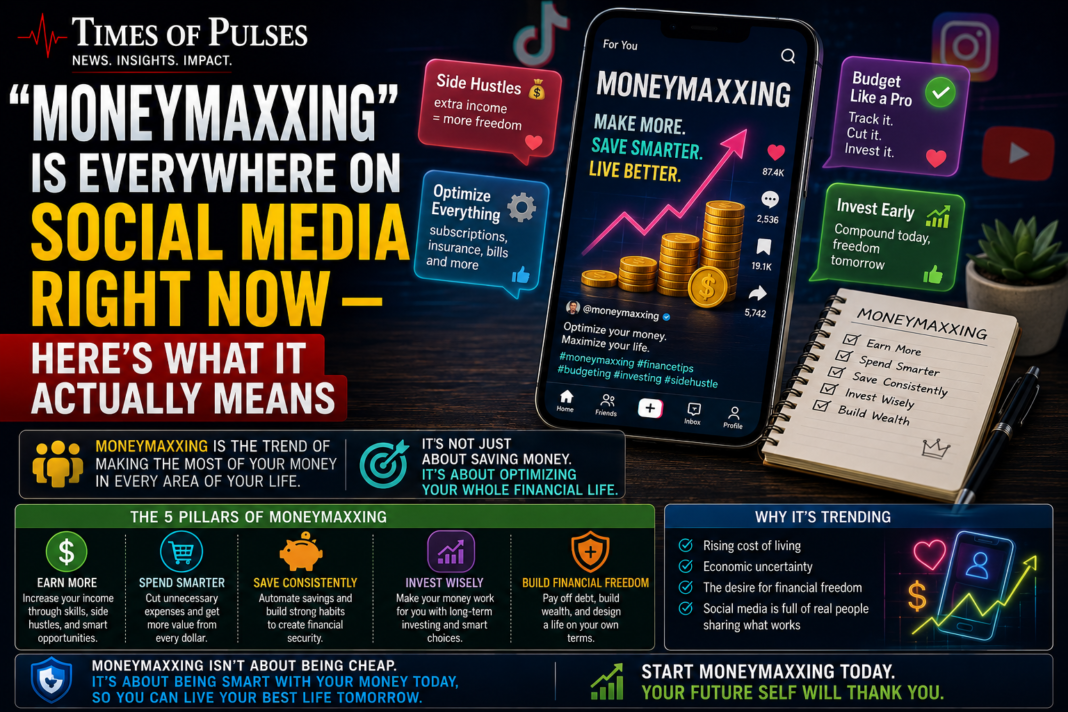
“Moneymaxxing” Is Everywhere on Social Media Right Now — Here’s What It Actually Means
If you’ve scrolled social media lately, you’ve probably seen “maxxing” attached to everything — looksmaxxing, sleepmaxxing, vacationmaxxing. Now finance has its own version, and moneymaxxing is being called something bigger than just another trend. CNBC reported this week that financial advisors are describing it as a genuine “cultural shift,” not a fad that fades in a few months. Here’s what moneymaxxing actually means, why it’s resonating so widely, and how to actually apply it to your own finances.
What Moneymaxxing Actually Is
Moneymaxxing is the practice of intentionally optimizing every dollar you have — reviewing your spending, savings, and investments with fresh eyes and asking a simple question: am I actually making the most of what I already have? Certified Financial Planner Felicia Greenwald, who helped popularize the term after a LinkedIn post, describes it as a modern, gamified take on financial habits people have always had access to, just repackaged in a way that feels more engaging and less intimidating.
Common moneymaxxing tactics include:
- Moving savings into the highest-yielding accounts available, rather than leaving cash in a low-interest account
- Reviewing and reallocating investments to make sure they still match your actual goals
- “Pointsmaxxing” — squeezing maximum value out of credit card rewards and points programs
- Cutting unused subscriptions and genuinely unnecessary recurring expenses
- Using AI-powered budgeting tools to spot spending patterns you might otherwise miss
Why Moneymaxxing Is Resonating So Widely Right Now
The timing isn’t random. Northwestern Mutual’s 2026 Planning & Progress Study found that over half of millennials remain financially dependent on their parents, and Americans on average don’t expect to reach full financial independence until age 37. Separate 2025 data from the same company found that 43% of millennials don’t have a retirement account, 31% lack a savings account, and a striking 79% of Gen Z and 66% of millennials don’t have any emergency fund at all — a gap we’ve covered in detail in our recent reporting on the $2000 emergency fund crisis.
Jack Howard, head of money wellness at Ally Bank, told reporters that moneymaxxing appears to have real staying power specifically because it focuses on building everyday habits rather than chasing a quick fix — a genuinely different approach than most viral finance trends, which tend to burn out within a season.
The Generational Split Inside Moneymaxxing
Interestingly, moneymaxxing doesn’t look the same across age groups. Millennials tend to approach it through stability-focused habits — budgeting discipline, bill timing, and long-term planning, reflecting the financial caution many developed coming of age during and after the 2008 recession. Gen Z’s version leans more toward flexibility, rewards optimization, and using digital tools to make everyday spending “work harder,” reflecting a generation that grew up with mobile banking and instant financial data at their fingertips.
A related, more intense version of this same shift has emerged too: Bloomberg recently profiled young “retirement-maxxers” — Gen Z savers, some in their mid-20s, aggressively saving 50% or more of their income, with one profiled saver reaching $300,000 saved by age 26 through disciplined, sustained sacrifice.
Why Financial Advisors Are Taking Moneymaxxing Seriously
This isn’t just a social media curiosity to industry professionals. A CFP Board Ambassador specifically compared moneymaxxing’s underlying philosophy to the established FIRE (Financial Independence, Retire Early) movement, noting it reframes genuinely sound financial principles in a way that feels more accessible and less overwhelming to people who might otherwise avoid thinking about their finances altogether.
That accessibility matters. Financial content consumption is genuinely high among younger generations, yet the preparedness gaps above show that consuming financial content and actually acting on it are two very different things. Moneymaxxing’s appeal is that it turns “optimize your finances” from an abstract goal into something that feels more like a game with visible, trackable wins.
How to Actually Start Moneymaxxing Yourself
- Get a genuinely clear picture of where you stand first. List every account, balance, and recurring expense before trying to optimize anything — you can’t maximize what you haven’t mapped out.
- Audit your savings account rate. If your emergency fund or savings sits in a low-interest account, moving it to a high-yield option, something we’ve covered in our guide to the best high-yield savings accounts, is one of the simplest, highest-impact moneymaxxing moves available.
- Review your credit card rewards structure. If you’re not maximizing points, cashback, or benefits you’re already entitled to on cards you already use, that’s value being left on the table every month.
- Cut genuinely unused subscriptions, not necessarily everything enjoyable — moneymaxxing isn’t about deprivation, it’s about intentional spending.
- Use technology to spot patterns you’re missing. AI-powered budgeting tools can surface spending trends that are easy to overlook when reviewing a bank statement manually.
- Curate your financial social media feed deliberately. Following accounts and people with similar financial goals can provide both practical ideas and a sense of accountability, according to behavioral finance experts.
What You Should Actually Do This Week
- Pick one moneymaxxing category to start with — savings rate, credit card rewards, or subscription audit — rather than trying to overhaul everything at once
- Check your current savings account APY against current best high-yield options, since this is often the single fastest win available
- Set a specific, trackable target, since part of moneymaxxing’s appeal is treating financial progress like a game with visible milestones
- Revisit your progress monthly, not just once, since the “everyday habits” framing is what experts say gives this trend more staying power than past viral finance fads
Bottom Line
Moneymaxxing isn’t introducing radically new financial concepts — reviewing your spending, chasing better interest rates, and using rewards programs fully are all ideas that have existed for decades. What’s genuinely different is the framing: turning financial optimization into an accessible, almost gamified habit rather than an intimidating, occasional chore. Given the real preparedness gaps behind the trend — millions of Americans without emergency funds or retirement accounts — a cultural shift that makes people actually engage with their money, whatever you call it, is worth taking seriously.
This article is for informational purposes only and does not constitute financial advice. Consult a licensed financial advisor for guidance specific to your financial situation.