
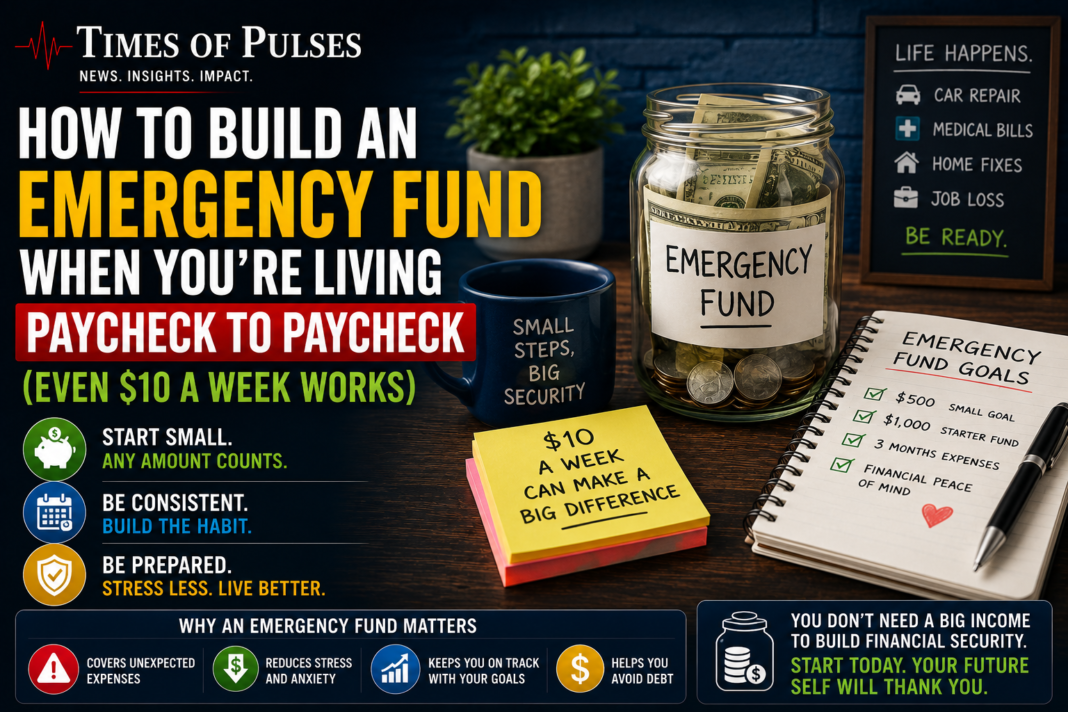
How to Build an Emergency Fund When You’re Living Paycheck to Paycheck (Even $10 a Week Works)
Learning how to build an emergency fund can feel like a luxury when your paycheck barely covers this month’s bills. But recent survey data shows just how widespread this gap really is: more than a third of Americans say they’re not confident they could cover a surprise $2,000 expense, and nearly 40% report they don’t have an emergency fund at all. If that sounds familiar, this isn’t a lecture about discipline — it’s a realistic plan that works even when your income is tight.
Why This Matters More Than It Used to
Daily expenses have climbed faster than paychecks for most households over the past few years, and that gap is exactly why so many people feel like they’re one car repair or medical bill away from real trouble. Knowing how to build an emergency fund isn’t about becoming a super-saver overnight — it’s about closing that gap just enough that a single bad week doesn’t turn into months of credit card debt.
Step 1: Start With a Number That Feels Almost Too Small

Most traditional advice says to save three to six months of expenses. If you’re living paycheck to paycheck, that number is so far away it can feel pointless to even start — so ignore it for now.
Instead, set your first goal at $500 to $1,000. This is the number that covers most common emergencies: a car repair, a broken appliance, an unexpected medical copay. Research on how to build an emergency fund consistently shows that people who start with a small, achievable target are far more likely to actually stick with saving than those who fixate on the “ideal” six-month goal from day one.
Step 2: Automate a Small, Fixed Amount
Even $10 to $20 per paycheck adds up faster than it feels like it should. The key to how to build an emergency fund successfully isn’t the size of each deposit — it’s consistency. Set up an automatic transfer to a separate savings account (not your checking account, where it’s too easy to spend) for the day after payday, when the money is still there.
Why a separate account matters: keeping emergency savings physically separate from your everyday checking account removes the temptation to dip into it for non-emergencies, and studies on saving behavior consistently show “out of sight” money gets spent far less often.
Step 3: Redirect Money You’re Already Losing
Before cutting anything from your lifestyle, look for money that’s leaking out without you noticing:
- Subscription audit: most people are paying for at least one subscription they forgot about or barely use. Cancel it and redirect that amount straight into savings.
- Round-up savings apps: many banking apps round up debit card purchases to the nearest dollar and stash the difference — it’s a way to save without feeling it.
- A one-time windfall: tax refunds, rebates, or cashback rewards are ideal emergency fund seed money, since they’re not part of your regular budget to begin with.
- Watch for silent debt traps: services like Buy Now, Pay Later can quietly eat into the same budget room you’re trying to free up for savings, even when each individual payment feels small.
Step 4: Treat “Small Wins” as Real Progress
One of the biggest reasons people give up on learning how to build an emergency fund is that $500 feels insignificant compared to the “recommended” six-month cushion. It isn’t. A recent survey found that not saving enough is the single most common financial regret Americans report — more common than overspending or racking up debt. Every deposit, no matter how small, is progress toward avoiding that regret.
Step 5: Once You Hit Your First Goal, Build in Layers
After reaching $500-$1,000, don’t stop — just shift the target gradually:
- One month of essential expenses (rent/mortgage, utilities, groceries, transportation only — not your full budget)
- Three months of essential expenses
- Six months, if your income is variable or your job security feels uncertain
Each layer gives you more breathing room, but the first $500-$1,000 is what actually stops a single emergency from becoming new debt — which is the real point of learning how to build an emergency fund in the first place.
What to Do If You Truly Have Nothing Left Each Month
If your budget genuinely has zero room, the honest first step isn’t saving — it’s finding even $5 a week through one of the leaks above, or temporarily redirecting any extra income (overtime, a side gig, a tax refund) entirely into this fund until you hit that first $500. It won’t feel like much some weeks. It adds up faster than it seems.
Bottom Line
How to build an emergency fund isn’t really about having extra money — it’s about protecting yourself from needing it in the first place. Start with $500, automate whatever amount you can manage even if it’s small, redirect money you’re already losing to subscriptions or fees, and resist the urge to feel behind because your number isn’t “six months” yet. The gap between having some emergency savings and having none is the difference between a bad week and a bad year.
This article is for informational and educational purposes only and does not constitute financial advice. Consult a licensed financial advisor for guidance specific to your situation.