
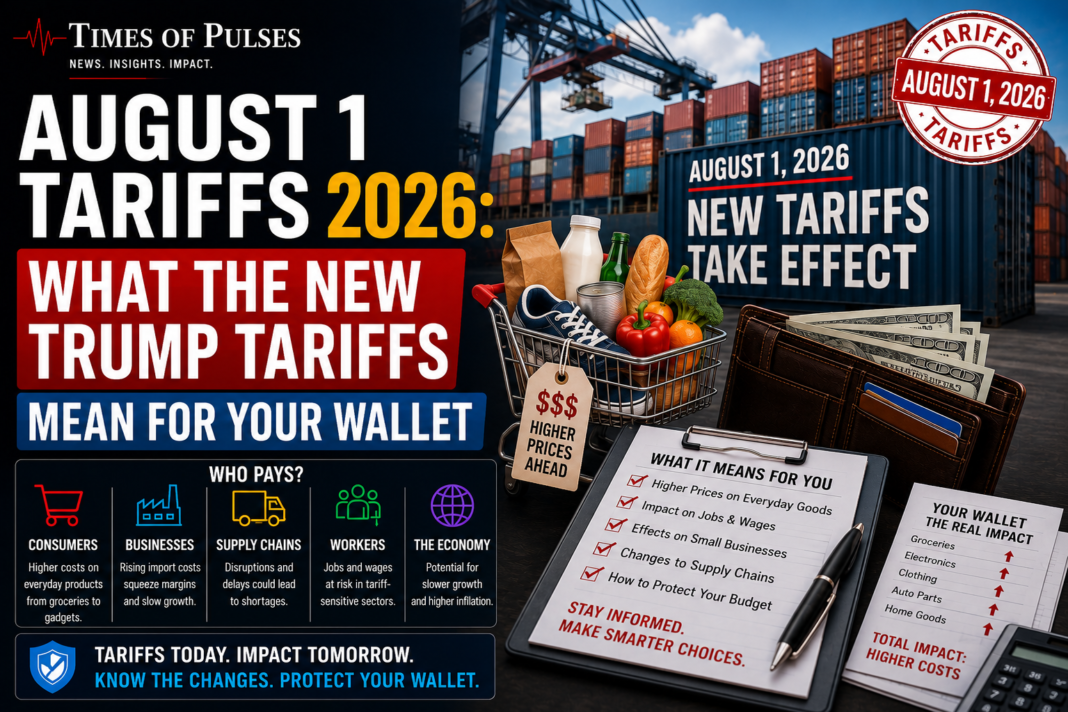
August 1 Tariffs 2026: What They Actually Mean for Your Grocery and Gas Bill
The August 1 tariffs 2026 deadline has arrived, and it’s genuinely significant for anyone who buys imported goods — which, in practice, is almost everyone. After months of delays and negotiations, new country-specific tariff rates are taking effect, some as high as 50%, on goods from dozens of countries. Here’s what actually changed, why it happened now, and what it means for prices on everyday purchases.
What the August 1 Tariffs 2026 Actually Are
The August 1 tariffs 2026 stem from the Trump administration’s “reciprocal tariff” policy, which imposes country-specific import duties on goods entering the United States. After the original April 2025 “Liberation Day” tariffs were delayed multiple times, Commerce Secretary Howard Lutnick called August 1 a “hard deadline,” and the administration has largely stood behind it, sending formal letters to dozens of countries outlining their specific new rates.
Rates vary significantly by country and product. Brazil faces a notably steep 50% tariff, while other countries face rates ranging from a 10% baseline up toward 46% for some Asian trading partners, depending on the specific trade relationship and ongoing negotiations. China remains under a separate track, with its own updated tariff rates tied to an August 11 deadline if no agreement is reached before then.
Why the August 1 Tariffs 2026 Matter So Much
This isn’t a minor policy adjustment. When similar reciprocal tariffs briefly took effect back in April 2025 before being delayed, the stock market reacted with its worst single-day performance since the COVID-19 pandemic. That reaction reflects how deeply these tariffs touch the broader economy — from import costs for businesses to final prices for consumers.
Legally, this policy has already been through real turbulence: the Supreme Court ruled in February 2026 that the administration’s original legal authority (under the International Emergency Economic Powers Act) didn’t actually authorize these tariffs, forcing the administration to rebuild its tariff structure using different legal authorities, including Section 122 and Section 301 of trade law. That legal back-and-forth is part of why rates and deadlines have shifted so many times over the past year.
What the August 1 Tariffs 2026 Mean for Everyday Prices
Tariffs are ultimately a tax on imported goods, and businesses typically pass at least part of that cost on to consumers. Categories most likely to see price effects from the August 1 tariffs 2026 include:
- Everyday consumer goods with significant import exposure, from clothing to electronics
- Food items sourced internationally, particularly from countries facing the steepest new rates like Brazil
- Vehicles and auto parts, which remain under separate but related Section 232 tariffs
- Building materials, including lumber and certain metals already facing elevated tariffs from earlier in the year
Some categories carry exemptions worth knowing about — certain agricultural products, civil aircraft parts, and generic pharmaceuticals and their ingredients are excluded from these reciprocal tariffs specifically.
Why the Deadline Kept Moving (And Might Still Change)
If this feels like the tariff deadline that never actually arrives, that’s a reasonable read of the past year. The administration has repeatedly delayed enforcement to allow more time for trade negotiations, and Commerce Secretary lutnick himself acknowledged that “nothing stops countries from talking to us after August 1” — meaning rates could still shift for specific countries even after the deadline technically passes, based on ongoing negotiations.
What You Should Actually Do About the August 1 Tariffs 2026
- Expect gradual price increases, not an overnight jump. Businesses typically absorb some tariff costs initially and pass along the rest over weeks or months as existing inventory sells through and new, tariff-affected inventory arrives.
- If you’re planning a major purchase with import exposure — electronics, appliances, vehicles — consider whether buying sooner rather than later makes sense, though weigh this against your actual need rather than panic-buying.
- Build extra flexibility into your budget for imported goods categories, similar to how we’ve suggested building buffer room for volatile gas prices this year.
- Watch which countries you regularly buy from. If a significant share of your typical purchases (coffee, electronics, clothing brands) come from a country facing a steep new rate like Brazil’s 50%, that’s worth specifically tracking in your budget.
- Don’t assume today’s rate is permanent. Given how many times these deadlines and rates have shifted over the past year, continued negotiation could still change specific country rates in the coming weeks.
The Bigger Economic Picture
The August 1 tariffs 2026 land at a genuinely complicated moment for the broader economy — arriving the same week as a hawkish Fed decision, a technical correction in the Nasdaq, and elevated bond yields. Tariff-driven price increases add a real wildcard to the inflation conversation the Fed has been wrestling with all year, potentially complicating the path toward the rate cuts many households have been hoping for.
Bottom Line
The August 1 tariffs 2026 represent one of the most significant, and most delayed, trade policy shifts of the past year, with real potential to affect prices on everyday goods from groceries to electronics. Given the legal challenges and repeated deadline extensions this policy has already been through, it’s worth staying informed rather than assuming today’s specific rates are the final word — but the direction is clear enough that building some budget flexibility for imported goods is a reasonable step regardless of how the details continue to evolve.
This article is for informational purposes only and does not constitute financial, legal, or trade advice. Tariff policy continues to evolve and is subject to legal challenges and negotiation; consult official government sources or a trade professional for guidance specific to your situation.