
How to Pay Off Credit Card Debt Fast in 2026: A Realistic Step-by-Step Plan
If you’re trying to figure out how to pay off credit card debt fast in 2026, you’re part of a very large group right now. Americans collectively owe $1.252 trillion in credit card debt as of the first quarter of 2026, and the average individual cardholder balance has climbed to $6,519. If that sounds like your situation, here’s a realistic, step-by-step plan to actually make progress this year, not just another list of tips you’ve already heard.
Why So Many People Are Stuck Right Now
Before jumping into strategy, it helps to understand why credit card debt has become such a widespread problem. A recent survey found that 53% of consumers carry credit card balances specifically to cover essential expenses, not discretionary spending, and 25% have carried that debt for six months or longer. At an average APR near 21%, a $6,500 balance generates roughly $114 in interest every single month, meaning minimum payments barely touch the actual principal.
This matters because it changes the starting point for anyone learning how to pay off credit card debt fast in 2026: this usually isn’t a spending problem you can fix by cutting out coffee. It’s an interest-rate math problem that requires a specific strategy to overcome.
Step 1: Get the Full Picture First
Before choosing a payoff method, list every card you have with three details: the balance, the interest rate (APR), and the minimum payment. This single step reveals which cards are actually costing you the most, which is often different from which card has the largest balance.
Step 2: Choose Your Payoff Strategy
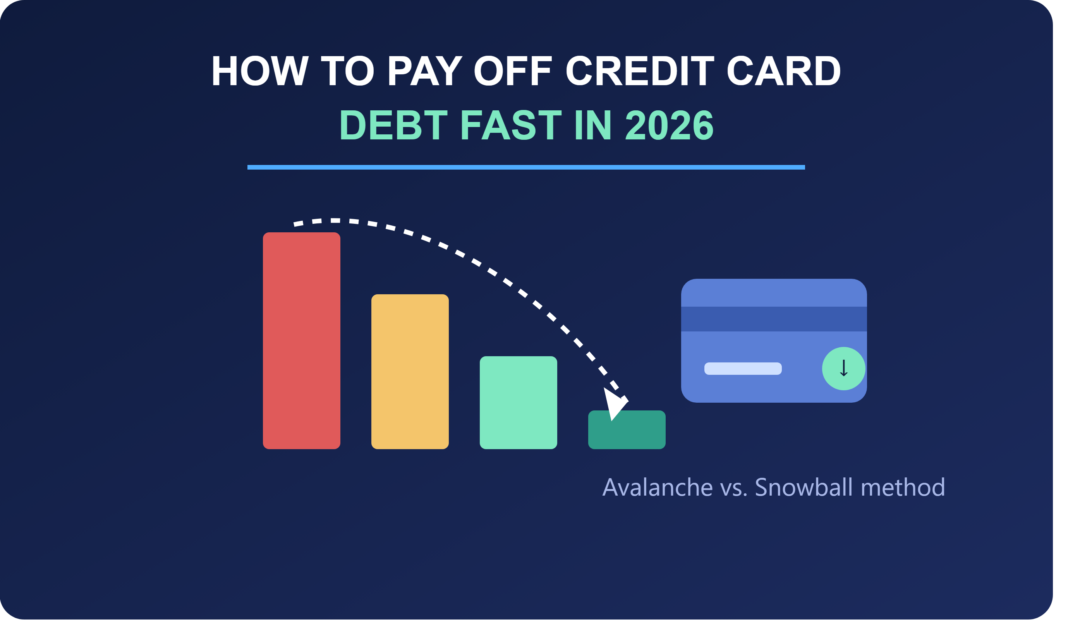
There are two proven approaches, and the “best” one depends on your personality more than the math:
The Debt Avalanche Method — Pay minimums on every card, then throw every extra dollar at the card with the highest interest rate first. Once it’s paid off, roll that payment into the next-highest-rate card. This method mathematically saves you the most money in total interest.
The Debt Snowball Method — Pay minimums on every card, then throw every extra dollar at the smallest balance first, regardless of interest rate. Once it’s gone, roll that payment into the next-smallest balance. This method is less mathematically efficient but tends to keep people motivated longer, since they see full balances disappear sooner.
Neither method is “wrong.” Financial counselors note that the method you’ll actually stick with beats the mathematically perfect method you abandon after two months.
Step 3: Consider a Balance Transfer Card
If your credit is in good shape, a balance transfer card can be one of the fastest ways to accelerate payoff. These cards let you move existing high-interest balances onto a new card with a 0% introductory APR, often lasting 12 to 21 months. During that window, every dollar you pay goes toward the principal instead of interest.
A few things to watch for:
- Balance transfer fees typically run 3% to 5% of the amount transferred
- The 0% rate is temporary — once the promotional period ends, the standard rate (often 20%+) resumes on any remaining balance
- This strategy only works if you stop using the old cards, otherwise you risk accumulating debt in two places at once
Step 4: Try Paying More Than Once a Month
Here’s a lesser-known trick: credit card interest is calculated daily, not monthly, based on your average daily balance. That means splitting your payment into smaller, more frequent chunks throughout the month, rather than one lump sum at the due date, can lower the average balance interest is calculated on. Paying $250 every week instead of $1,000 once a month, for example, is the same total payment but can reduce the total interest charged over time.
Step 5: Consider Debt Consolidation for Larger Balances
If your balances are spread across multiple cards and feel unmanageable, a debt consolidation loan combines everything into a single fixed-rate installment loan, often at 7% to 24% APR depending on your credit score — a significant improvement over 20-29% credit card rates. This approach only makes sense if you genuinely qualify for a meaningfully lower rate and commit to not running the old cards back up afterward.
Step 6: Know When to Call in Professional Help
If your debt genuinely feels unmanageable on your own, a nonprofit credit counseling agency (like those affiliated with the National Foundation for Credit Counseling) can negotiate a debt management plan with your creditors, sometimes reducing your interest rate to single digits. Unlike debt settlement, a debt management plan doesn’t damage your credit score the way negotiated settlements can.
Debt settlement and bankruptcy remain options for genuine financial hardship, but both come with meaningful credit score consequences and should generally be treated as last resorts after other options have been explored.
A Quick Reality Check on Timeline
According to Bankrate’s 2026 Credit Card Debt Report, only 48% of cardholders carrying a balance actually have a plan to pay it off. Simply having a specific plan, rather than a vague goal to “spend less,” dramatically improves your odds of success. If you’re serious about learning how to pay off credit card debt fast in 2026, the plan matters more than the willpower.
What You Should Actually Do This Week
- List every card, balance, and interest rate in one place today
- Pick avalanche or snowball based on which will actually keep you motivated
- Check if you qualify for a balance transfer card, especially if your credit score is solid
- Automate your payments so progress doesn’t depend on remembering a due date
- Freeze new spending on the cards you’re paying down, even if that means physically setting them aside
For related reading on managing multiple accounts while you pay things down, our guide on Buy Now, Pay Later risks covers a similar debt-stacking trap worth avoiding while you focus on this payoff plan.
Bottom Line
Learning how to pay off credit card debt fast in 2026 comes down to three things: understanding exactly what you owe, picking one specific strategy rather than a vague intention, and using tools like balance transfers or consolidation loans where they genuinely fit your situation. The math is very much in your favor once you stop paying only the minimum — the sooner you start, the less you’ll pay in interest by the time you’re done.
This article is for informational purposes only and does not constitute financial advice. Consult a licensed financial advisor or nonprofit credit counselor for guidance specific to your debt situation.