
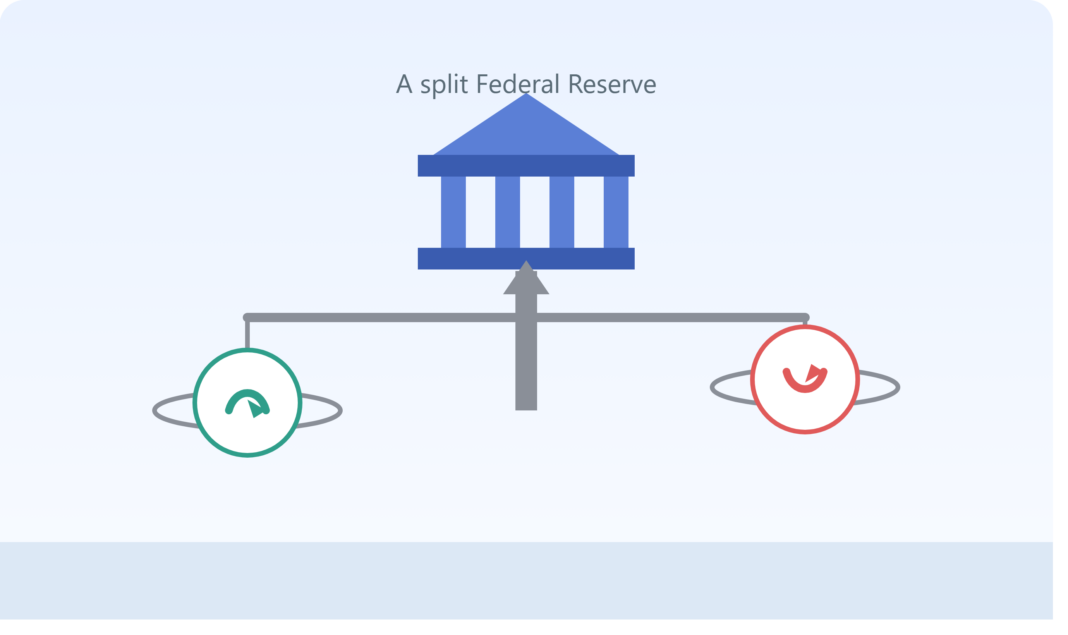
The Fed Can’t Agree on Rates: What the Divided FOMC Minutes Mean for You
If you’ve been waiting for a clear signal on where interest rates are headed next, today’s news doesn’t offer one. The minutes from the Federal Reserve’s June policy meeting, released today, reveal something unusual: the Fed’s own officials are genuinely split on what to do next. Some want to cut rates, others are leaning toward holding steady or even raising them. Here’s what that divide actually means for your mortgage, savings, and debt.
What the Minutes Actually Revealed
The Federal Open Market Committee, or FOMC, is the group inside the Fed that sets the direction of interest rates. Their June meeting minutes, released today, showed officials arguing both sides of the case:
- Some members pointed to the recent weak jobs report as a reason to cut rates and support a cooling labor market
- Others pointed to the risk of oil-driven inflation, especially with crude prices climbing amid the ongoing Middle East tensions, as a reason to hold off or even consider tightening
In plain terms: the people who set your interest rates don’t have a consensus, and they’re openly saying so. That’s a meaningfully different signal than the confident, single-direction guidance markets are used to getting.
Why This Matters More Than It Sounds
A divided Fed isn’t just an academic detail — it changes how markets and everyday borrowers should think about the months ahead:
- More uncertainty, more volatility. When the Fed’s own committee is split, markets tend to react more sharply to each new piece of economic data, since there’s no clear consensus to anchor expectations.
- The next data release matters even more. With officials citing both the jobs report and inflation risk as reasons for opposite moves, upcoming reports on inflation, employment, and oil-driven price pressure will carry outsized weight in determining which side wins out.
- “Wait and see” becomes the Fed’s likely stance short-term. Historically, when a committee is this divided, they tend to hold rates steady at the next meeting rather than risk a move that a chunk of the committee disagrees with.
What This Means for Your Mortgage
If you were hoping for a clear signal that mortgage rates are about to drop, this news adds a wrinkle. A divided Fed makes near-term rate cuts less certain than they seemed after the weak jobs report alone. Mortgage rates are also influenced by the 10-year Treasury yield, which itself reacts to this kind of uncertainty — sometimes rising even when a rate cut still seems likely eventually, simply because markets hate ambiguity.
Practical takeaway: if you’re planning to buy or refinance, don’t assume a rate drop is imminent just because one report looked weak. It may be worth locking in a good rate you’re offered rather than gambling on a cut that isn’t guaranteed to come soon.
What This Means for Your Savings
High-yield savings accounts and CDs have been offering solid returns partly because rates have stayed elevated. A divided Fed, leaning toward “hold steady for now,” is actually good news if you have cash sitting in savings — it likely means those attractive rates stick around a bit longer than they would have if a cut were a sure thing.
Practical takeaway: if you’ve been comparing CD rates, there’s less urgency to lock one in immediately purely out of fear that rates are about to fall — though CDs can still make sense if you have a specific savings goal and want a guaranteed return.
What This Means for Credit Card Debt
The same logic applies here in reverse. If a rate cut isn’t as certain as it seemed a week ago, don’t expect credit card APRs to drop anytime soon either.
Practical takeaway: don’t wait around for the Fed to bail you out of high-interest debt. Whatever the Fed decides, tackling your highest-interest balance first, or calling your card issuer to ask for a lower rate, remains one of the most effective things you can do regardless of where rates head next.
The Bigger Pattern Worth Watching
This divide inside the Fed reflects a genuinely tricky economic moment: a labor market that’s cooling (arguing for lower rates) colliding with an oil price shock that could reignite inflation (arguing against lower rates). These two forces are pulling in opposite directions, and until one clearly wins out, expect:
- More back-and-forth in financial media about “will they, won’t they” on rate cuts
- Continued sensitivity in markets to Middle East developments, since that’s now directly tied to the inflation side of the Fed’s dilemma
- A greater-than-usual chance that the Fed’s next move surprises people in either direction
What You Should Actually Do
- Don’t make big financial decisions based on rate-cut predictions. With the Fed this divided, predictions are genuinely less reliable right now than usual.
- If a mortgage or refinance rate looks good today, don’t assume waiting will get you a meaningfully better one soon.
- Keep building your emergency fund and paying down high-interest debt regardless of what the Fed does — those are good moves in any rate environment.
- Watch the oil situation as closely as the jobs data. For the first time in a while, geopolitical news and Fed policy are directly intertwined, which makes it worth following both threads together rather than separately.
Bottom Line
A divided Fed isn’t a crisis, but it is a genuine signal that the easy, confident predictions about rate cuts this year just got a lot murkier. The smartest response isn’t trying to out-guess the committee — it’s making sure your mortgage, savings, and debt decisions hold up reasonably well no matter which way the Fed eventually leans.
This article is for informational purposes only and does not constitute financial advice. Interest rate decisions are inherently uncertain; consult a licensed financial advisor before making borrowing or investment decisions based on Fed policy expectations.